The $1,800 Contract You Lose Every Time Speed-to-Lead Slips Past 5 Minutes
“Pest control speed-to-lead is not about answering phones faster. It is about locking in $1,800 of annual contract revenue before the clock hits five minutes.”
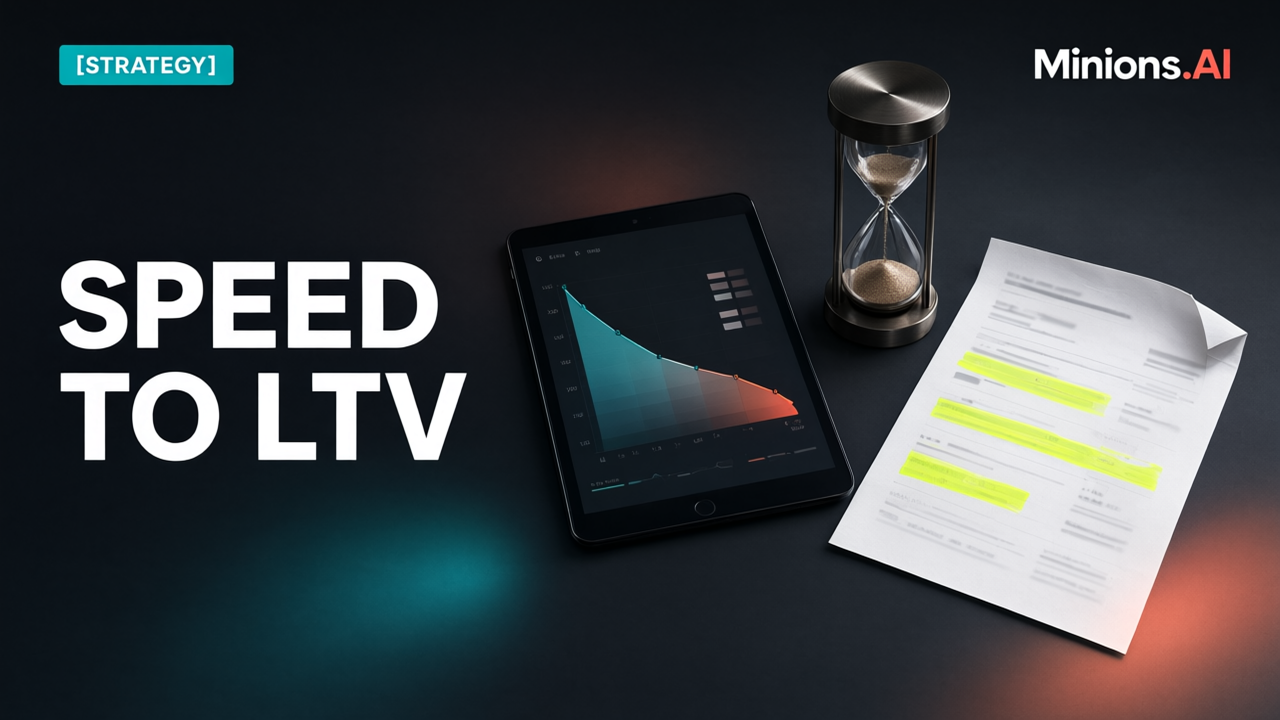
The $1,800 Contract You Lose Every Time Speed-to-Lead Slips Past 5 Minutes
Speed-to-Lead Is a Revenue Leak, Not a Service Metric
Industry dogma treats speed-to-lead as a customer service KPI for salvaging emergency tickets. Structural truth shows it is a recurring revenue multiplier: a 25-minute delay destroys 80% of annual contract LTV. That gap is where the next section starts.
The 40% → 8% Conversion Cliff
Emergency termite treatments in Phoenix carry a 40% probability of converting to an annual contract when contacted within five minutes. That drops to 8% after thirty minutes, a 32-point collapse in conversion headroom. A $3,200 emergency ticket functions primarily as a paid acquisition channel for $1,800 recurring revenue streams. This is not theoretical: for a shop like this, every missed five-minute window leaks one full annual contract per week. That decay curve is the real bottleneck.
One-Turn Contract Capture, Not Multi-Turn Triage
The new model replaces manual triage with deterministic, single-turn routing: verify availability, confirm contract terms, and lock the annual agreement, all before the caller hangs up. No follow-up emails. No voicemail callbacks. No technician reassignment lag. This eliminates the probabilistic drift that kills conversion momentum. Every call becomes a closed-loop revenue event, not an open-ended handoff.
Under the Hood: CRM Sync + Termite-Specific Scripting
getminions.ai executes three precise actions on inbound pest calls: (1) cross-checks live tech availability against service radius and termite inspection capacity; (2) triggers a pre-approved, Arizona-specific annual contract script with tiered pricing tiers and automatic renewal logic; (3) writes the signed agreement and scheduled first visit directly into the shop’s existing CRM, no manual entry. No voice latency. No token hallucination. Just deterministic execution.
Tactical Takeaways
Run the termite-specific qualification logic before offering any price or appointment slot.
Assign based on real-time termite inspection bandwidth, not just nearest truck GPS.
Sync the signed annual agreement and first visit date into your system before the call ends, no post-call data entry.
Measure how many emergency calls received >5-minute response time, each represents one lost $1,800 contract.
Parvej
Co-Founder, Minions.AI
Want to see this in action for your own business?
Call our live test line right now. Hear how our voice agent handles a real emergency service inquiry in under 1.8 seconds.